Why our oil stings (and why that's a good thing)
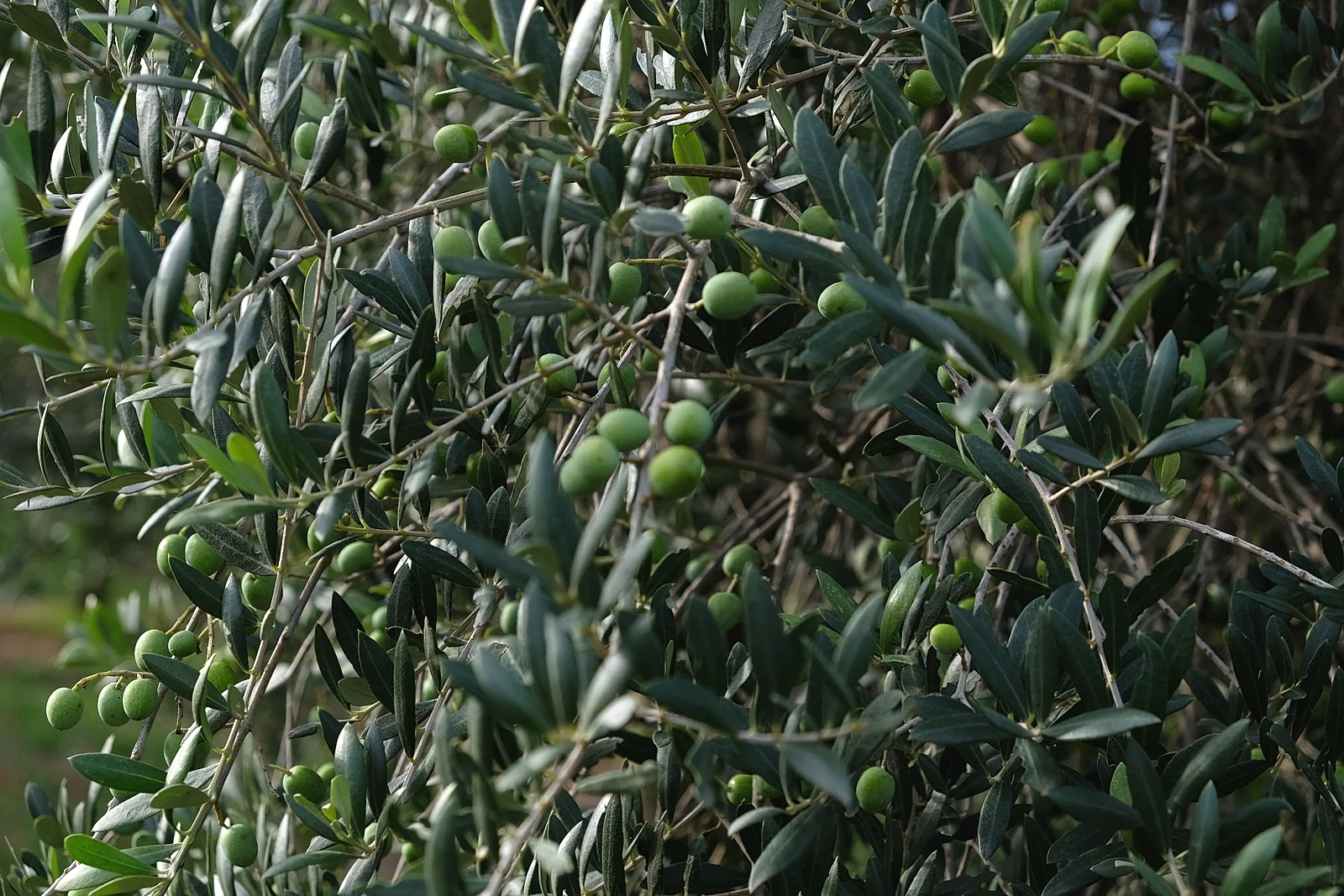
When tasting our first harvest pressing, people often notice a vivid, peppery, lingering sensation catching the back of the throat. It is an experience that can catch those used to mild, mass-produced supermarket oils by surprise.
Some hesitate, others smile. If you smile, you are entirely right. This sensation has a name, a clear agronomic reason, and is the undeniable signature of a truly living olive oil.
That peppery kick has a name: oleocanthal
This fleeting warmth in the throat has nothing to do with added spices. It is caused by oleocanthal, a natural antioxidant from the polyphenol family (specifically, secoiridoids) found in fresh olives.
Oleocanthal has a fascinating biological characteristic: it goes almost completely unnoticed by the taste buds on your tongue. Instead, it specifically activates the sensory TRPA1 receptors located at the back of the pharynx. That explains the distinctive progression during tasting: the oil glides across the palate with roundness and gentle smoothness, only to release its characteristic peppery sting the moment you swallow.
The fresher the olive and the earlier the harvest, the higher the natural oleocanthal concentration, and the cleaner this peppery signature becomes.
The surprise of a 100% Arbequina
Last year, our harvest pressing was 100% Arbequina.
In conventional perception, Arbequina is often categorized as merely "sweet" or delicate. The reason is simple: large-scale commercial farming usually harvests it very late in the season, from soft, overripe black olives that have lost nearly all their natural protective compounds.
At Domaine JEMM, we take the exact opposite approach: an early harvest (collita primerenca), picked by hand when the olives are still green and firm on the branch. On our limestone clay soil early-harvest Arbequina reveals unexpected intensity and vitality: vibrant aromas of fresh-cut grass, tomato leaf, and artichoke, carried by a distinct, noble peppery kick.
Demystifying acidity: the secret of freshness
People often confuse pepperiness or bitterness with "acidity." That is a persistent misconception.
In truth, free acidity in olive oil is completely odorless and tasteless: it is biologically impossible to taste. Acidity does not measure flavor; it measures chemical degradation—the breakdown of olive cells when the fruit is bruised, damaged, or begins to ferment.
In industrial oil production, olives often sit in piles or trailers for days before milling, which causes acidity to spike. Our practice is uncompromising: we harvest by hand with family and friends, treating each tree with care, and bring the olives to the mill on the very evening of the harvest for pure cold extraction (kept below 27°C).
That peppery tingle in your throat is not acidity at all: it is the absolute opposite of degradation—the liquid proof of total freshness and the living vitality of natural antioxidants.
Living soil that strengthens the tree
Olive trees do not produce these protective compounds by accident. As quintessential Mediterranean trees, they synthesize polyphenols to defend themselves and adapt to their environment.
By reviving the biological activity of our soil through a continuous mulch of chipped branches, we foster deep mycorrhizal symbioses with the ancient limestone travertine of Pla de Martís. The tree draws on this natural mineral reserve to nourish the pulp of each olive.
In practice
You do not need to be a biochemist to appreciate these benefits. Drizzle generously over warm crusty bread, ripe summer tomatoes, or seasonal roasted vegetables. Take in the crisp aromas of living greenery, enjoy that clean peppery warmth at the back of your throat, and savor the sincere taste of respected land.